Market solutions
Built for the shelf you already have.
Display and POP/POS fixtures for supermarkets and drugstores. Made in Hangzhou since 2011 and shipped to more than 120 countries.
Most of the work is OEM and ODM for retail chains, importers and brand owners. A smaller part is in-stock supply, for buyers who need a container filled this month rather than next quarter.

What we make
Eight product families cover most of what leaves the plant. Each one is built to fit a shelf that already exists, not to replace it.
POP/POS displays and props
Shelf talkers, showcard frames, poster hangers, sign stands and tabletop holders, sized to the shelf edge or to the aisle floor.
View groupShelf merchandising displays
Spring pushers, dividers, display hooks, hanging strips and roller shelves that keep a facing pushed to the front.
View groupFresh produce displays
Produce racks, plastic baskets and sampling stands for the fresh aisle, built to drain and to take a wash-down.
View groupCheckout and anti-theft
Checkout dividers, coin trays, stop locks and anti-theft pull boxes for the till area and the high-value shelf.
View groupShopping carts and baskets
Baskets, trolleys, stackable crates, pallets and utility carts, in nestable formats that suit a compact stockroom.
View groupLED sign holders
Plug-in and rechargeable LED frames for menu boards, promo cards and window campaigns that run after dark.
View groupElectronic shelf label components
ESL shelf strips and accessories, profiled to hold the rail your label system already uses.
View groupAcrylic display products
Acrylic sign holders, display holders and boxes, made to a drawing when no catalogue size fits.
View groupBeyond the catalogue: customisation from a drawing or a sample, ready-to-ship stock on fast movers, and a store-format proposal when a whole estate is being refitted.
Inside the plant
Two views of the same 6,000 square metres: the plastics line, where clips and pushers are moulded, and the packing hall, where an order is closed. Metal, acrylic and wood run in the same building.
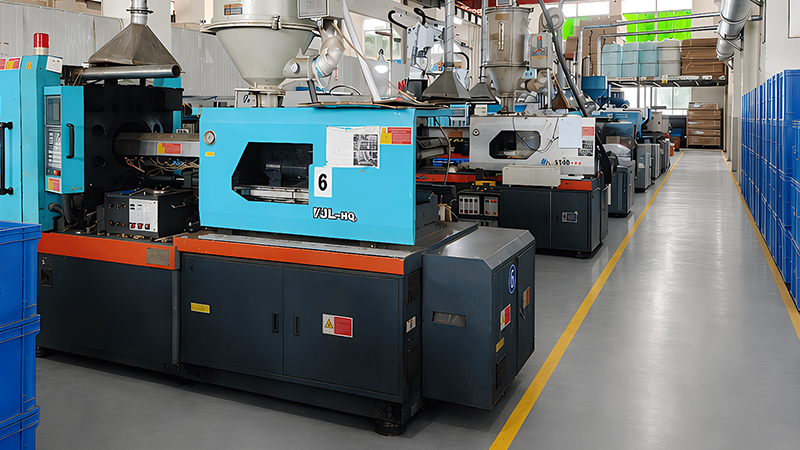
Plastics
Injection machines moulding the clips, pushers and shelf-edge parts that go with the frames.
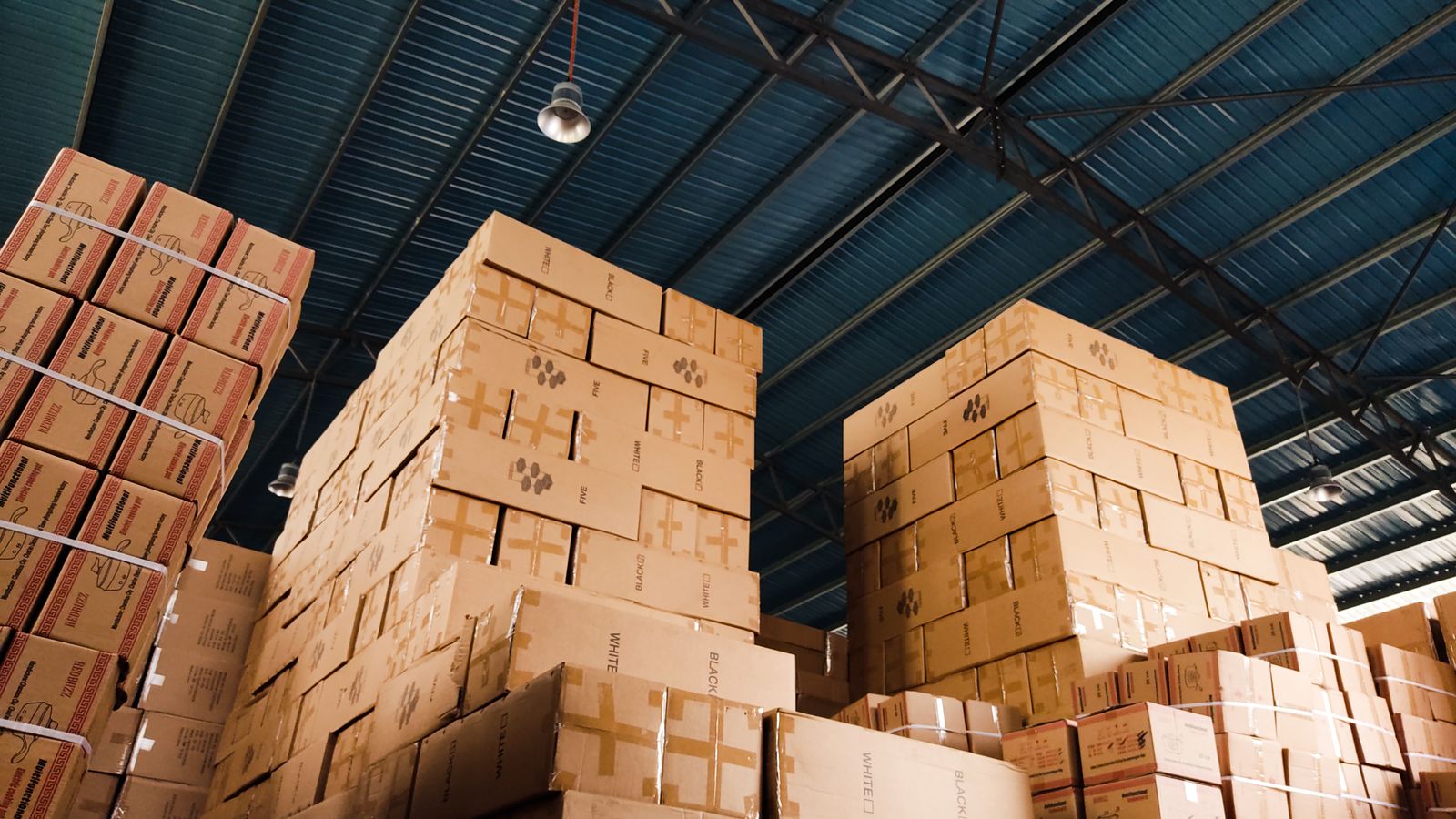
Packing
Kitted and marked per store, then palletised against the packing list you approve.
Where it ships, and what each market asks for
Six regions account for most of our volume. Each is quoted against its own paperwork, not a generic export file.
Europe
Germany · Netherlands · France · Belgium · Poland · Italy · Spain · United Kingdom
Our largest region by volume, and the heaviest on documentation. Discounters buy shelf-edge strips, price channels and pushers; hypermarkets buy gondola accessories, produce stands and checkout fittings.
Settle firstCE declarations, packaging EPR data for each country, ISPM 15 for wood, and label wording in the local language.
North America
United States · Canada · Mexico
Chain retail here runs on a vendor compliance manual rather than a regulation. Carton size, pallet height, label placement and ASN rules differ by retailer, so we quote against the manual you send.
Settle firstCarton and pallet specification signed before the run, and the routing guide your DC actually enforces.
South America
Brazil · Chile · Peru · Colombia
Longer transit and importer-led clearance, so mixed containers and pre-shipment photographs matter more than a fast production date. Buyers repeat two or three models through the year.
Settle firstConsolidated loading plan, carton-level packing list, and photographs per model before the container is sealed.
Middle East
United Arab Emirates · Saudi Arabia · Qatar · Kuwait
Heat, dust and daylight do more to a fixture than handling does. Buyers ask for UV-stable coatings that do not chalk, plus Arabic labelling on the printed parts.
Settle firstSABER registration sits with the importer; we supply the technical file and the test reports behind it.
Japan and East Asia
Japan · South Korea · Hong Kong SAR, China · Macao SAR, China · Taiwan, China
The tightest tolerances and the highest expectations for finish, usually on smaller quantities per model. Packaging is judged as part of the product, not merely as protection for it.
Settle firstTolerance and finish agreed on a signed sample, and cartons that arrive square, clean and unbranded.
Oceania
Australia · New Zealand
Biosecurity rules make wood packaging a real constraint, so plywood or corrugated board is often specified instead. Campaign timing is seasonal and unforgiving.
Settle firstWood packaging declaration and treatment record, and a booking early enough for the pre-Christmas peak.
If your market is not on this list, it does not mean we have not shipped there. Name the country and the requirement, and the reply comes back with the document list for it.
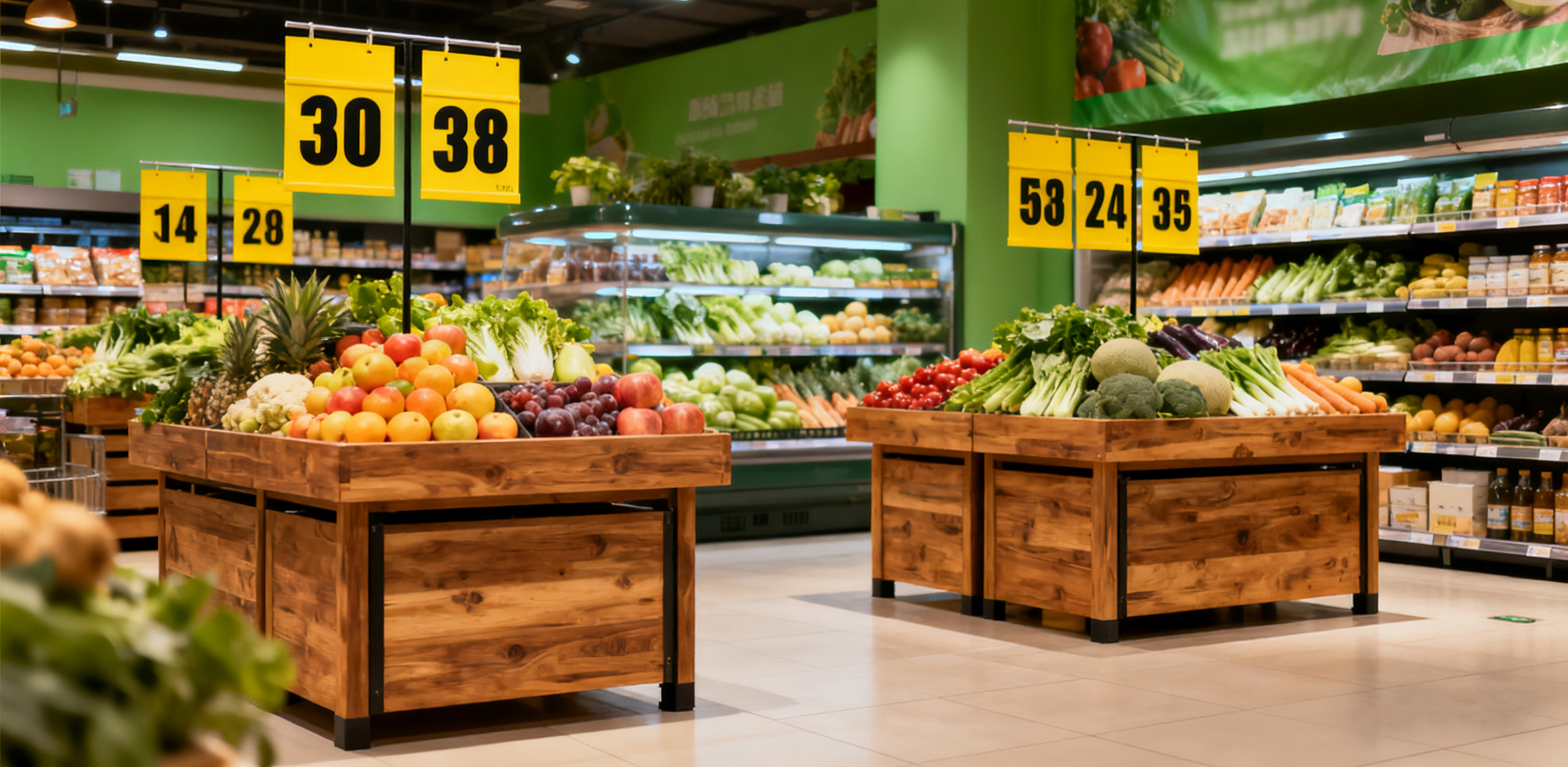
Same fixture, six rulebooks.
What changes between these regions is not the hardware. It is the paperwork, the packing specification and the delivery window. More than 120 countries, counted from our own shipping records.
How a first order runs
Four stages between your first message and a container at the port. Each one ends with something you can read or hold.
Brief
A photo, a sample or a drawing. Reviewed and answered within one business day.
Proposal and priceSample
Free on catalogue lines. Seven to ten days where a new structure or a new print is needed.
Signed sampleProduction
25 days after approval, through nine process steps and five inspection gates.
Inspection reportDelivery
Sea 20–40 days, air 5–10, express 3–7. FOB, CIF or DAP.
Container at portCooperation policy
Four terms that hold whatever the order size, written on the quotation rather than agreed later.
Per model. Catalogue lines ship as a normal order at that quantity; tooling is quoted as its own line.
Catalogue samples are free; you cover the courier. A new structure or print takes seven to ten days.
From sample approval, through nine process steps and five inspection gates.
Agreed per order and printed on the proforma invoice, so the terms exist in one place.
Private label, mixed containers and per-store packing are routine rather than exceptions: printed inserts, cartons, pallet labels and packing lists all carry your brand, and the product itself carries no supplier mark.
Why buyers stay
Four things that decide whether a second order happens, rather than the first one.
Five inspection gates
Incoming material, in-line control, post-paint control, outgoing audit and pre-shipment inspection, under ISO 9001.
Metal, acrylic, wood, plastic
All four run under one 6,000 square metre roof, so a frame and its clip cannot arrive mismatched.
50 million pieces a year
A hundred-piece trial run does not have to queue behind a container order.
Ten designers and engineers
ODM work starts from your requirement, even when there is no drawing yet.
Certificates and compliance
ISO 9001 is the management system the plant is certified against. The rest are declared or tested per product line, for the model you actually order.
 ISO 9001
 CE
 UKCA
 RoHS
 REACH
 BSCI
What travels with the goods: a carton-level invoice and packing list, the carton and pallet marks your distribution centre asks for, the ISPM 15 treatment record wherever wood packaging is used, and the test reports behind any CE or UKCA declaration on the line you order.
What stays with you, as importer of record: customs entry, packaging EPR registration and product registration. We supply the technical file behind those filings.
Two orders, told plainly
Names withheld at the customer's request. The details are as they happened.
Four shelf profiles, one clip
A store refresh kept breaking the same holder on four different shelf profiles. A single extrusion now covers four clip variants, so the part the shopper sees is identical across the estate and only the fixing changes. Staff in four hundred stores fit the replacement by hand, without tools.
One insert, two languages
Printed inserts were lifting at the edge in humid stores. We tested a laminated board and a stronger adhesive on a sample, then ran the batch. German and Dutch artwork went through the same run, packed so the two versions were never mixed in a carton.
Before a first order
The eight questions that come up in almost every first call, answered the way we answer them on the phone rather than in a brochure.
Do you have a minimum order?
100 pieces per model. Catalogue lines ship as a normal order at that quantity. Custom structures carry a one-time tooling cost, quoted as its own line.
How fast is a sample?
Free on standard products, with the courier as the only cost to you. A custom sample takes seven to ten days.
Can we mix models in one container?
Yes, and it is usually cheaper per unit. Cartons are kitted and marked per store or per region against the packing list you approve.
Will you put our brand on it?
Yes. Private label covers the printed insert, the carton, the pallet label and the packing list, with no supplier marks on the product itself.
What documents come with a shipment?
Carton-level invoice and packing list, the carton and pallet marks your DC asked for, and the ISPM 15 record for wood packaging. Test reports and declarations are issued per product on request.
Who handles clearance and registrations?
You do, as the importer of record: customs entry, packaging EPR registration in the countries where you sell, and WEEE for the LED lines. We supply the data those filings need.
What are your payment terms?
Agreed per order and printed on the proforma invoice, so the terms exist in one place rather than in an email thread.
What if goods arrive damaged?
Photograph the carton and the unit before the pallet is broken down, and send it with the packing list reference. We assess it against the packing specification we signed together.
Name the market and the date.
Tell us the country, the shelf and the day the goods are needed. You get a proposal within one business day, and if the date does not work, the same reply will say so.
Send your brief